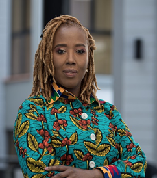



Wambui Chege
With over 25 years of experience, Wambui Chege is a seasoned advisory services professional with experience in international development – specifically private sector development in the financial and agricultural sectors. She is currently the Independent Chair for Making Finance Work for Africa, an independent initiative housed at the Africa Development Bank. Passionate about the catalytic role of development finance, Wambui has been involved in some of the most cutting edge financial sector development programmes on the African continent. Between 2014 and 2019, Wambui was Team Leader of the Mastercard Foundation Fund for Rural Prosperity (FRP), a seven-year US$50 million challenge fund where she led the design and implementation of the fund. Under her leadership, FRP evolved to be a leading fund supporting some of the best innovations in financial inclusion for smallholder farmers in sub-Saharan Africa. Before that, Wambui worked at the International Finance Corporation (IFC) the private sector arm of the World Bank, where she led the design and implementation of the organization’s first housing finance programs on the continent, aimed at developing mortgage markets. Her other areas of work include SME banking and agrifinance as well as advising governments. Prior to working with IFC in 2006, Wambui worked for nearly eight years as a commodities and financial markets correspondent with Reuters in Kenya, Tanzania and South Africa. Wambui has a Masters in International Affairs from the School of International and Public Affairs, Columbia University in the City of New York and a Bachelor of Commerce from Kenyatta University, Kenya. She is also an advisor to Samata Capital, a venture capital fund focused on gender-lens investing. Other board memberships include independent board member of Fairtrade Africa where she served for 4 years as an independent until August 2020.
Isabelle Lessedjina
Isabelle SVP CEO Office at TCX Fund (global development finance initiative which offers long-term currency swaps and forwards in 100+ financial markets where such products are not available or poorly accessible) where she is responsible for Investor Relations, Strategic partnerships and External. Isabelle is transformational leader with experience in implementing business transformation and in creating diverse and high-performing teams. Prior to joining TCX, she held senior roles in Infrastructure and asset finance at Philips Capital, GE Capital and other financial institutions where she originating and structured complex projects across EMEA. She is passionate about mentoring and coaching high potential leaders as well as Innovative and disruptive solutions. In her spare time, Isabelle mentors women leaders and entrepreneurs, while studying piano and oenology. Isabelle has studied Business administration and financial risk management in Belgium and has an MBA from IESE Business School in Spain.
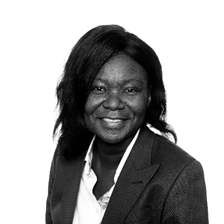
Elsie Addo Awadzi
Mrs. Elsie Addo Awadzi is the Second Deputy Governor of the Bank of Ghana. She has oversight responsibilities for the regulation and supervision of banks and other licensed financial institutions, financial stability and a number of other key areas of the Bank’s operations. Overall, she supports the Governor in steering the affairs of the Bank. She is the second woman to be appointed Deputy Governor in the Bank’s 63-year history. She was recently appointed by H.E. President Akufo-Addo as one of seven Trustees of the COVID-19 National Trust Fund, established by an Act of Parliament to complement the efforts of Government to support those at the forefront of combating the disease and the needy and vulnerable infected with or affected by the disease. Elsie is a legal, governance, and international finance professional with over 24 years of professional experience in Ghana and internationally. Before her appointment as Deputy Governor in February 2018, she was Senior Counsel of the IMF’s Legal Department (Financial and Fiscal Law Unit) where she worked for six years advising IMF member country authorities (mostly Finance Ministries and Central Banks) in Africa, Asia, the Caribbean, Europe, and the Middle East, on banking sector regulatory reforms, banking sector crisis management, and public financial management reforms. Before joining the IMF in 2012, Mrs. Addo Awadzi was a two-term Commissioner of Ghana’s Securities & Exchange Commission and in that role, was active in formulating policies and rules to regulate the capital market. She was called to the Ghana Bar in April 1996 and thereafter worked with major law firms in Ghana, including one she founded and run for 10 years, and designed several financial sector legal and regulatory reforms in Ghana and other African countries. She also worked briefly as a Senior Treasury Dealer at Barclays Bank Ghana. Elsie holds academic qualifications in law and finance from Georgetown University Law Center, Ghana School of Law, University of Ghana Business School, and University of Ghana Faculty of Law. She has several international publications on financial regulation and crisis management, public debt management and corporate governance, among others. She is passionate about strengthening economic governance to support inclusive and sustainable socio-economic development of nations, and loves to motivate others to reach their God-given potential.
Michael Atingi-Ego
Mr Michael Atingi-Ego is a Ugandan economist who started out his career at the Bank of Uganda. He rose through the ranks of the Bank to become the Executive Director, Research before taking up an assignment in 2008 with the International Monetary Fund (IMF) as Deputy Director of the African Department (AFR). While at the IMF, he contributed to IMF work on increasing effectiveness of capacity development and in modernizing monetary policy frameworks in developing countries. In September 2018, he was appointed as Executive Director for the Macroeconomic and Financial Management Institute Of Eastern And Southern Africa (MEFMI). Mr. Michael Atingi-Ego assumed the role of the deputy governor of Bank of Uganda (BoU) in August 2020 following his appointment in March 2020. He holds a bachelor's degree in Economics from Makerere University, a Master of Arts in Economics awarded by the Cardiff Business School, in the United Kingdom (UK) and a Doctor of Philosophy degree in Economics from the Liverpool University, UK. (Sources Wikipedia, Kampalapost of August 3rd, 2020, Bank of Uganda publications).
Judith Tyson
Judith is a specialist in financial market development with more than two decades’ experience as an investment banker at JP Morgan and Deutsche Bank. She spent six years at SOAS University of London where she was research assistant on the EU FESSUD project on financialization and an adjunct lecturer. She has also published books and articles relating to a wide variety of topics including the development of capital markets, financial instability risks, financial inclusion, insurance and co-partnering of public and private sectors in financing for development. Judith Tyson holds a PhD in financial sector development.
Jacqueline Irving
Jacqueline Irving is Senior Sector Economist in IFC’s Sector Economics and Development Impact Dept. and the department’s focal for capital markets including related to development of pension funds and insurers as asset managers. Previously, as Director of the Center for Financial Markets at the Milken Institute, she led the Capital Markets for Development unit’s policy research and advisory work. In this role, she worked directly with Rwanda’s Capital Markets Authority and capital markets stakeholders to prepare a 10-year Capital Markets Action Plan for developing Rwanda’s capital markets. As a senior economist with the U.S. finance ministry, she was responsible for the desk portfolio for financial inclusion. Prior to this, she colaunched the Thought Leadership Research division for Oxford Economics, serving as the practice manager for OE’s evidence-based research programs on emerging markets finance. As a Senior Economist with the World Bank from 2005-11, Irving led and contributed to data-driven policy research and advisory work on capital markets development, infrastructure finance, and remittance markets. This included leading an assessment of the potential for African financial sectors to raise long-term finance for infrastructure, as part of the NEPAD-driven Africa Infrastructure Country Diagnostic. She joined the WB initially on secondment from the IMF, where she had led and contributed to TA/operational work and relevant research on African securities markets development. During the 1990s, she managed the Economist Intelligence Unit’s country financial markets content and analysis, leading a team of 50 regional analysts and in-country finance experts in 45 countries including in Africa. Early in her career, she was an Assistant Manager with the Dreyfus Corporation, an investment management firm and pioneer in the mutual fund industry. She has authored and coauthored policy research papers, policy briefs, books, and articles on topics related to capital markets development and financial inclusion. Irving has a Master's degree from Columbia University with a specialization in international economic policy and a research focus on regional economic and financial integration.
Abimbola Agbejule
Abimbola is a graduate of Business Administration from the University of Lagos and an MBA holder from the University of Leicester, United Kingdom with specialization in Quality Management. She has over 16 years’ experience in banking, spanning brand management, strategic planning, digital banking and corporate sustainability. She started her career with Bond Bank in 2002 which later merged with five other banks to form Skye Bank in 2006. She worked in various capacities in Skye Bank such as Branding and Strategic Communication, Investment Banking and Strategic Planning. She joined Wema Bank in 2015 as Head of Strategy and moved to become the Project Manager for Wema Bank’s award-winning digital banking flagship platform, ALAT, in 2016 and later became the Head of Commercial for ALAT by Wema. She is currently leading the Corporate Sustainability and Responsibility team to provide digital solutions for societal impact, leveraging on the success recorded in ALAT. She has been in the forefront in driving inclusive socio-economic initiatives with focus on making societal impact on youth and women. Some of the initiatives include Hackaholics – a gathering of radical minds such as developers, web designers and creative thinkers coming together to develop solutions to pertinent problems in our society leveraging on digital technology. Also, she has led a lot of women empowerment initiatives which include capacity building, skill acquisition, budgeting and planning and financial inclusion/literacy. Abimbola has attended several management and leadership programmes in strategic management, digital banking and sustainability. She is a member of the Chartered Institute of Managers, UK (CIM), Project Management Professional (PMP) and International Society for Sustainability Professionals (ISSP). Abimbola leverages her positive energy to encourage and develop others around her. She also hopes to you use her untiring commitment to make impacts in all spheres of life.
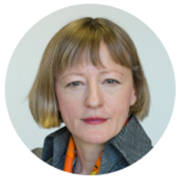
Moa Westman
Moa Westman, is a Gender Specialist at the European Investment Bank. Moa co-leads the implementation of the Bank’s Gender Equality and Women’s Economic Empowerment Strategy and Action Plan (GAP). The GAP cuts across all geographies and sectors in which the EIB works. Moa also leads a workstream at EIB to promote synergies between the banks climate action investments and social development. The EIB provides finance and expertise for sound and sustainable investment projects worldwide and will increase the share of its financing dedicated to climate action and environmental sustainability to reach 50% by 2025. Prior to joining the EIB, Moa worked for the United Nations Environment Programme Regional Office for Africa and at one of India’s leading renewable energy companies. Her experience centres on promoting gender equality and women’s empowerment in climate and environment related investments, policies and projects both in the private as well as the public sector. Moa holds a BA and Master of Political Science from Stockholm University.
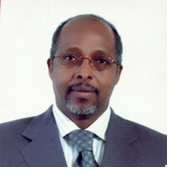
Mohamed Kalif
Mohamed Kalif is the Head of Financial Intermediation and Inclusion at the African Development Bank (AfDB) which covers commercial banks, insurance, leasing, regional development financial institutions, equity investments and financial inclusion including digital payment system throughout the African continent. Before joining the Financial Sector Development of the AFDB in 2010, Mohamed was Chief Commercial Risk Officer of African Development Bank for a period of 7 years. Prior to joining the AFDB, Mohamed was Head of project and construction finance for a commercial bank in Dubai where he was responsible for the development of the bank’s project finance activities throughout the Middle East included Saudi Arabia, Egypt, United Arab Emirates, Oman and India. He also served as a credit manager for one of the largest banks in Saudi Arabia for period of four years. Mohamed has accumulated 28 years banking experiences and corporate governance, including of risk management, corporate banking and project finance lending in commercial banks, development financial sector, equity investment analysis and evaluation and digital financial services environment. Moreover, Mohamed is a board member in several regional and national development financial institutions.
Nuru Mugambi
Nuru has helped shape Kenya’s banking industry. As director of public affairs and lead on Sustainable Finance at Kenya Bankers Association, she has spearheaded strategic initiatives aimed at reinforcing the industry’s role of being a core driver of Kenya’s sustainable economic development. Her contributions towards policy formulation have led the industry towards adopting numerous progressive practices, particularly in Sustainable Finance, Gender Diversity, Digital Accessibility for Persons with Disabilities, and Consumer Protection. Most recently, she designed and convened the Kenya Green Bond Program, which established a green bond market in the country and facilitated the first certified green bond in East and Central Africa that was issued by Acorn Holdings. Nuru serves on the National Treasury Taskforce on SME Finance that is working to establish the country’s first national SME Credit Guarantee Fund. She is also the Chair of the Eisenhower Fellowships Kenya Chapter and a Founding Trustee of Graca Machel Trust’s New Faces New Voices Women in Finance network. As a gender advocate, Nuru created the Leading Women in Banking and Finance initiative by KBA, which supports more than 200 women in senior positions and this October is hosting a conference with 1,000 delegates from across Africa. .
Amarendra Mohan
Mr Amarendra Mohan has more than three decades of professional experience in financial sector regulation and supervision. He worked for nine years as Senior Advisor at the Financial Stability Institute of the Bank for International Settlements (BIS) in Basel, Switzerland. While working at the BIS, Mr Mohan provided technical assistance to Central Banks and Financial Sector Supervisors globally and engaged in their capacity building for effective implementation of Basel Standards, especially on areas relating to risk, regulation, supervision, and financial stability. He was also a member of working groups of the Basel Committee on Banking Supervision. Before joining the BIS, Mr Mohan was Chief General Manager in the Department of Banking Regulation, Reserve Bank of India (RBI), where he led teams on a variety of regulatory and supervisory issues, including implementation of Basel Standards. Mr Mohan works as a Short-Term Expert with the International Monetary Fund and other Multilateral Agencies.
Lyness Phiri-Mambo
Mrs. Lyness Phiri-Mambo is an Assistant Director in charge of on-site examinations and off-site surveillance in the Bank Supervision Department at Bank of Zambia with over 17 years combined work experience in bank supervision, external auditing and accounting. Her work includes planning, supervising and directing the execution of on-site examinations and off-site surveillance of commercial banks to assess their risk profile, financial performance and condition, and ensure compliance with the relevant laws and relevant regulations. She has been involved in enhancing the early warning system and contributed to the development of the Bank Supervision Application System. In addition, she has been instrumental in rolling-out the enhanced Risk-Based Supervision approach. She is key member of the Basel II/III Project Team and has also contributed to the review of various banking laws and regulations.
Alexander R. Malaket
Alexander R. Malaket, CITP, CTFP, GTP-E, is President of Canadian consultancy OPUS Advisory Services International Inc., established in 2001, focusing on international business, trade and investment with a specialism in trade finance/supply chain finance and trade-related international development. Alexander serves on several industry boards and advisory bodies, including as Deputy Head of the Executive Committee, ICC Banking Commission, Chair of the International and Technical Advisory Committee, Global Trade Professionals Alliance, Member of the World Economic Forum E-15 Initiative and member of the Advisory Board of Tin Hill Capital (Singapore) among others.
Patrick Ball
Patrick Ball has been a Director at Verdant Capital since 2019, with focus on the Firm’s Specialist Funds platform. Patrick has over 20 years’ experience in private equity, impact investing and consulting. He holds an undergraduate degree in Finance from Georgetown University and an MBA from the Stephen M. Ross School of Business at the University of Michigan.
Lodewyk Meyer
Lodewyk Meyer is a partner with Baker McKenzie's Banking and Finance Practice Group in Johannesburg. He is a regular speaker at conferences on Africa trade and export finance, investment into Africa and structured finance. He has published on topics such as warehouse receipt financing, legal risks in doing business in Africa and the use of structured finance techniques in agriculture in various publications, among them Global Trade Review, Africa Investor, and Chambers Magazine.
Lanre Olininiyi
Lanre Olininiyi is An African optimist, with over 15 years of investment experience from doing business in Europe, Middle East and Africa (EMEA). Prior to co-founding Orbitt, I was involved in originating investment ideas and raising the required capital to grow start-ups in Africa. Previous start-up involvements have included Sankuru, First African Gold and Tranergy Capital.
Eric Monchu Intong
Eric Monchu Intong is Head of Financial Institutions, Africa and Core Banking Implementation Programme Lead at Afreximbank. Skills in Structured Trade Finance, Risk Management, Corporate Finance, Financial Analysis, Customer Due Diligence/KYC and astute Relationship Management. Track record in achieving results, MBA in Finance and Accounting from Rotterdam Business School.
Rana Badawi
Rana currently holds the position of Sub-Governor; Regulations Sector; handling the work of the Regulations Sector and working closely with the Financial Inclusion and Consumer protection Sectors and also all banking supervision sectors. She joined CBE in the Regulations Unit, under the Banking Supervision Sector - since 2010- during which she participated in amending and issuing prudential regulations to the banking sector; as well as issuing CBE initiatives to promote the economic activities and support the industries to promote growth from within. besides Moreover, she participates in responding to any inquiries related to the issued regulations or initiatives. Additionally, as a core part of the regulation unit work, Rana contributed effectively in the process of issuing the new law for the Egyptian banking sector, issued this year (2020). Currently, Rana is leading the process of updating and issuing new regulations for the proper implementation of the issued Banking Law.
Lodewyk Meyer
Lodewyk Meyer is a partner at Baker McKenzie's Banking and Finance Practice Group in Johannesburg. Lodewyk cover all aspects of lending and is recognised as a leading lawyer in the field of structured trade and commodities finance. His experience includes advising banks, structured trade, credit, insurance and speciality funds, and actors in the commodity value chain in Africa, the Middle East, Asia, Europe and the USA. He is a regular speaker at conferences on Africa trade and export finance, investment into Africa and structured finance. He has published on topics such as warehouse receipt financing, legal risks in doing business in Africa and the use of structured finance techniques in agriculture in various publications, among them Global Trade Review, Africa Investor, and Chambers Magazine.
Introduction

Session 1: Responding to the pandemic: Measuring the effectiveness of financial sector policy measures


Session 2: Responding to banking regulation and supervision challenges during the global pandemic
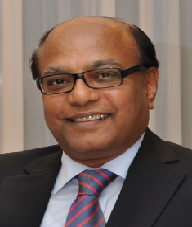
Session 3: Overcoming Trade Finance barriers for African SMEs

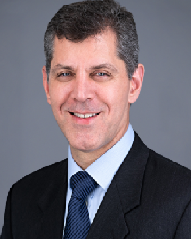
Session 4: Challenges and opportunities to mobilizing institutional investor assets in the COVID-19 context


Nzomo Mutuku
Chair Africa Pension Supervisors Forum and CEO
Kenyan Retirement Benefits Authority
Kenyan Retirement Benefits Authority
David Uduanu
CEO
Sigma Pensions Limited Nigeria
Sigma Pensions Limited Nigeria